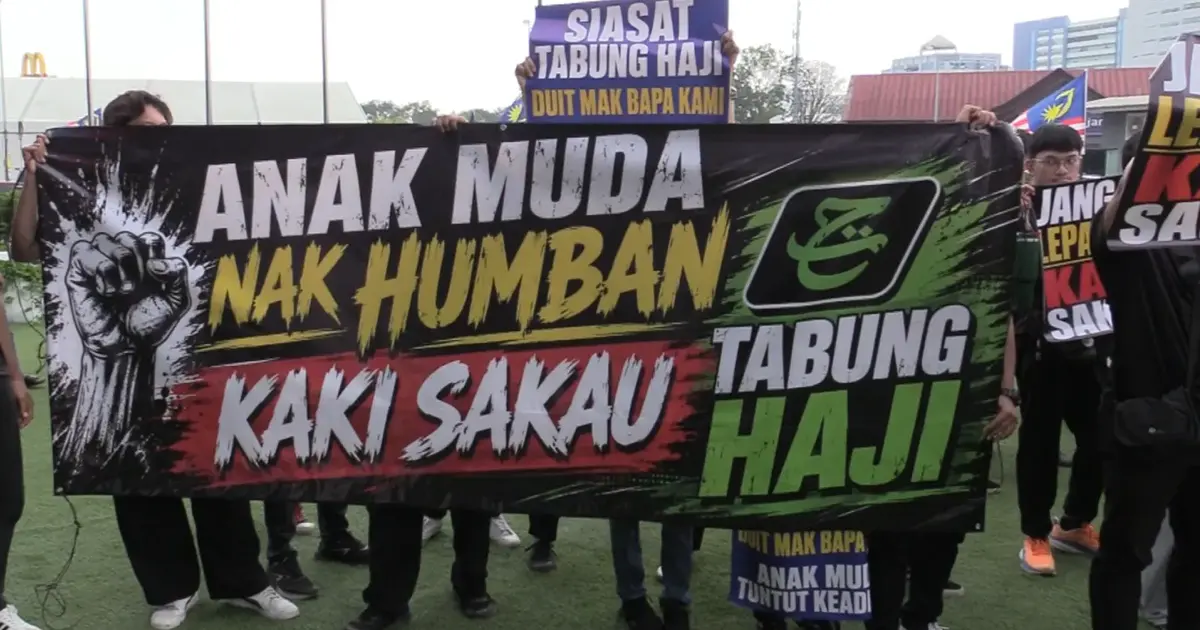
A gathering of roughly 250 People's Justice Party members converged outside a party congress in Melaka, staging a demonstration to pressure the organisation's decision-makers on an investigation into the Tabung Haji matter. The protesters sought to draw attention to what they view as an urgent need for swift and comprehensive inquiry into the Islamic pilgrimage savings fund, signalling grassroots frustration with the pace of any existing probes.
The Tabung Haji controversy has emerged as a focal point of concern within PKR's heartland, particularly among members who represent constituencies with significant Malay and Muslim populations. The protestors framed their intervention as a matter of principle, arguing that the issue carries profound weight within communities that form the electoral backbone of the party, and that the leadership cannot afford to treat the matter with anything less than the utmost seriousness.
Tabung Haji, Malaysia's pilgrimage fund management institution, has faced scrutiny in recent months regarding its operations and governance. The fund, which manages savings for Muslim Malaysians preparing for the Hajj pilgrimage to Mecca, holds symbolic and practical importance across the nation's Muslim-majority population. Any perceived mismanagement or irregularity strikes at the heart of trust in public financial stewardship, particularly affecting devotees who contribute their earnings toward fulfilling one of Islam's five pillars.
For PKR, which has positioned itself as a champion of reformist politics and transparency, the Tabung Haji issue presents both a challenge and an opportunity. The party has built considerable support among Malay-Muslim voters by emphasizing accountability and anti-corruption messaging. However, if investigations are perceived as moving too slowly or lacking rigour, the party risks appearing indifferent to concerns that resonate deeply with this demographic—a vulnerability that political opponents could readily exploit.
The demonstration outside the congress reflects growing impatience within the party's base regarding how leadership responds to governance failures in public institutions. Grassroots members, often more attuned to sentiment in their respective communities, may sense that voters expect swift action and visible commitment to uncovering and addressing any wrongdoing. This disconnect between leadership pace and member expectations can, if left unmanaged, undermine party cohesion and electoral confidence.
In the Malaysian political landscape, where Malay-Muslim voter sentiment remains pivotal across federal and state elections, issues affecting Islamic institutions carry outsized significance. Political parties that fail to demonstrate genuine concern for controversies touching these institutions risk losing critical support blocs. PKR's position as part of the broader opposition coalition means the party must remain competitive in capturing disenchanted Malay voters, a constituency increasingly volatile and responsive to perceived slights on matters of faith and communal welfare.
The protesters' assertion that the Tabung Haji issue is close to the hearts of Malays and Muslims underscores a fundamental political reality: governance failures affecting Muslim-specific institutions become symbolic of broader competence and trustworthiness. When citizens perceive that their savings destined for one of Islam's most sacred obligations have been mishandled, the damage extends beyond mere financial loss—it touches questions of respect, stewardship, and whether elected leaders prioritize community welfare.
For Malaysian readers and regional observers, this rally illustrates the mechanics of pressure within a political party structured ostensibly around reform principles. When grassroots members mobilize publicly to demand action, it signals either that internal channels have failed to address concerns adequately or that members believe visible public pressure strengthens the party's political positioning. Either interpretation suggests underlying tensions between PKR's rhetorical commitment to transparency and the perceived adequacy of its institutional responses.
The timing and location of the demonstration—coinciding with a party congress—adds strategic weight to the protest. By mobilizing outside the congress itself, demonstrators ensured their message reached party leadership and senior members gathered for deliberations. This tactic converts local grievance into a statement that reverberates through party structures, forcing an agenda that might otherwise be sidelined in favour of other political calculations.
Moving forward, how PKR responds to this grassroots demand will likely influence both internal party dynamics and the party's electoral appeal. If leadership accelerates investigations and demonstrates visible commitment to the Tabung Haji probe, the party can reinforce its reform credentials among Malay-Muslim constituencies. Conversely, perceived dismissal of member concerns risks validating narratives that PKR is disconnected from voter priorities, potentially driving further erosion of support within this crucial demographic segment.
The broader regional context matters as well. Across Southeast Asia, political parties governing Muslim-majority nations face similar pressures regarding institutional accountability and faith-based civic trust. How Malaysian parties navigate controversies affecting Islamic institutions may offer lessons for political movements elsewhere in the region navigating comparable governance challenges and electoral sensitivities.

