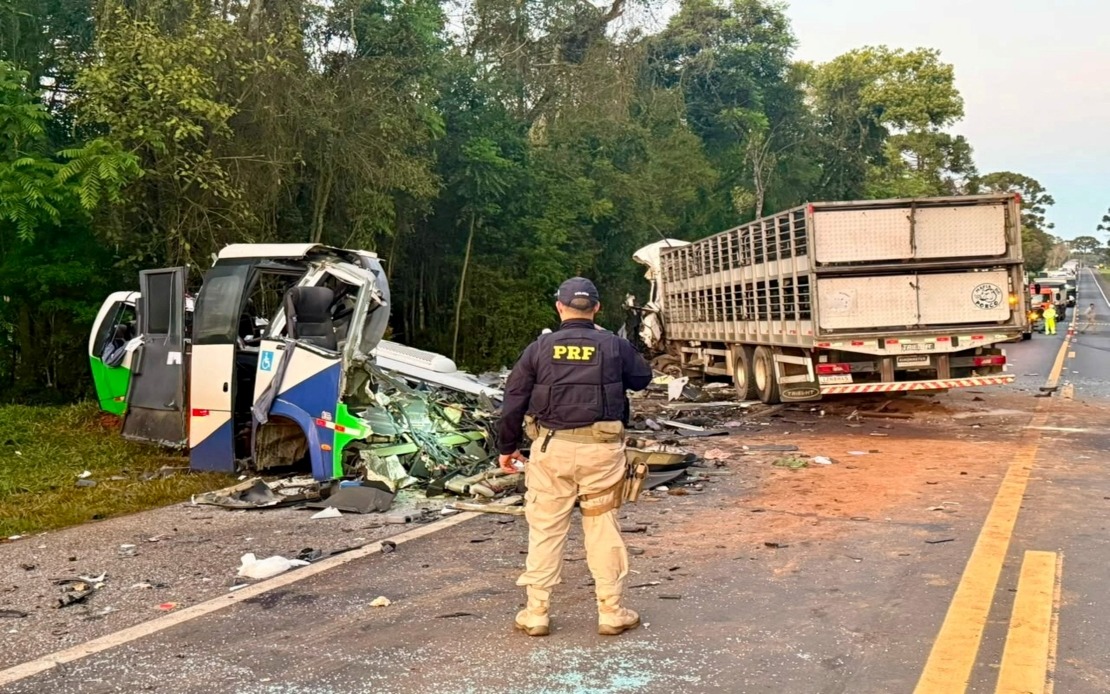
One of southern Brazil's deadliest road accidents in recent memory unfolded in the early hours of Wednesday when a minibus carrying patients collided head-on with a lorry on a national highway in Paraná state. The impact claimed 23 lives, making it a tragedy that has drawn national attention and prompted the state government to declare three days of official mourning. The collision occurred near Ipiranga, a municipality in the Campos Gerais region, a densely populated area that serves as a transit corridor for travel between major cities in southern Brazil.
According to preliminary investigations, the lorry appears to have drifted across the centre line into the path of the oncoming minibus, triggering the catastrophic head-on impact. The exact sequence of events leading to this drift—whether caused by mechanical failure, driver fatigue, or other factors—remains under active investigation by authorities. Such investigations typically take weeks to complete, and officials have not yet ruled out any contributing causes. The collision site was sealed off for several hours as emergency responders worked to extract victims and begin the forensic examination of the accident scene.
The minibus was operated by the regional health service and was en route to hospitals serving the greater Curitiba metropolitan area, approximately 200 kilometres from the point of impact. This detail underscores how what should have been a routine transfer of patients—likely scheduled in advance for medical appointments or treatments—turned into a nightmare for families and the healthcare system. Among the 23 fatalities were 13 women, eight men, and two children, along with the lorry driver. An additional five people suffered injuries and were transported to local hospitals for treatment, where their conditions are being monitored.
The stretch of highway where the accident occurred is part of a crucial national transportation network linking multiple regions across southern Brazil. In numerous sections, the road operates as a simple two-lane thoroughfare with no median barrier or physical separation between opposing traffic directions. This infrastructure limitation, common in many parts of Brazil despite heavy usage by commercial and passenger traffic, means that a driver error on one side of the road immediately places all vehicles in the opposing lane at severe risk. The lack of modern safety features—such as guardrails, rumble strips, or wider shoulders—reduces the margin for error and increases the potential for catastrophic outcomes when accidents do occur.
Brazil's road safety record has long been a concern for the government and public health advocates. The country consistently ranks among nations with elevated rates of traffic fatalities, driven by factors including inadequate infrastructure, speeding, driver fatigue among commercial operators, and limited enforcement of traffic regulations on certain highways. Mass casualty accidents like this one periodically capture headlines and spark debates about investment in road improvements and stricter safety enforcement. However, without sustained political commitment to infrastructure upgrades and enforcement initiatives, such tragedies continue to recur on the nation's highways.
For Malaysian readers, this incident serves as a sobering reminder of the dangers present on regional roads throughout Southeast Asia. While Malaysia's highways have undergone significant modernisation in recent decades, particularly with the expansion of the expressway network, other countries in the region continue to operate critical transport corridors with older infrastructure. The minibus involved in this accident was performing a function similar to medical shuttle services or intercity patient transport operations that exist throughout Malaysia and neighbouring countries. The vulnerability of such services to catastrophic accidents highlights the importance of maintaining rigorous maintenance standards, driver training programmes, and vehicle safety protocols.
The Paraná state government's decision to declare three days of mourning reflects the scale of the tragedy and its emotional impact on the community. Such declarations are typically made when accidents claim multiple lives or involve circumstances that generate widespread shock. The mourning period allows families to grieve and communities to process the loss collectively. In the aftermath of such disasters, investigations by state and federal authorities will examine not only the immediate cause of the collision but also systemic factors that may have contributed—from the condition of the highway itself to the training and certification status of the drivers involved.
Emergency response protocols and hospital capacities were tested by the sudden influx of five injured survivors requiring immediate medical attention. Regional healthcare facilities in the Campos Gerais area would have activated emergency procedures to accommodate the victims, coordinate with specialists in larger cities, and manage the logistics of treating multiple trauma cases simultaneously. This challenge illustrates how major road accidents place enormous strain on healthcare infrastructure, particularly in less densely populated regions where advanced trauma centres may be located at considerable distance.
The incident also raises questions about the adequacy of vehicle maintenance standards for commercial vehicles operating on Brazilian highways. Regulatory oversight of lorries and other heavy vehicles remains inconsistent in many regions, and mechanical failures—such as brake system deterioration or steering problems—can contribute to loss of vehicle control. While current evidence suggests a lorry drift caused the collision, a comprehensive investigation will determine whether vehicle defects played any role in the driver's loss of control.
Looking forward, this tragedy will likely prompt renewed discussion about highway safety improvements in Paraná and throughout Brazil. Potential measures under consideration in comparable situations include installation of median barriers on high-traffic sections, improved road markings and signage, enhanced lighting in critical areas, and potentially reduced speed limits in particularly hazardous zones. Such improvements require capital investment and take time to implement, but they have proven effective at reducing the frequency and severity of head-on collisions in other countries. The challenge for Brazilian policymakers is balancing the significant costs of comprehensive highway upgrades against the ongoing human toll of preventable accidents like the one that claimed 23 lives this week.

