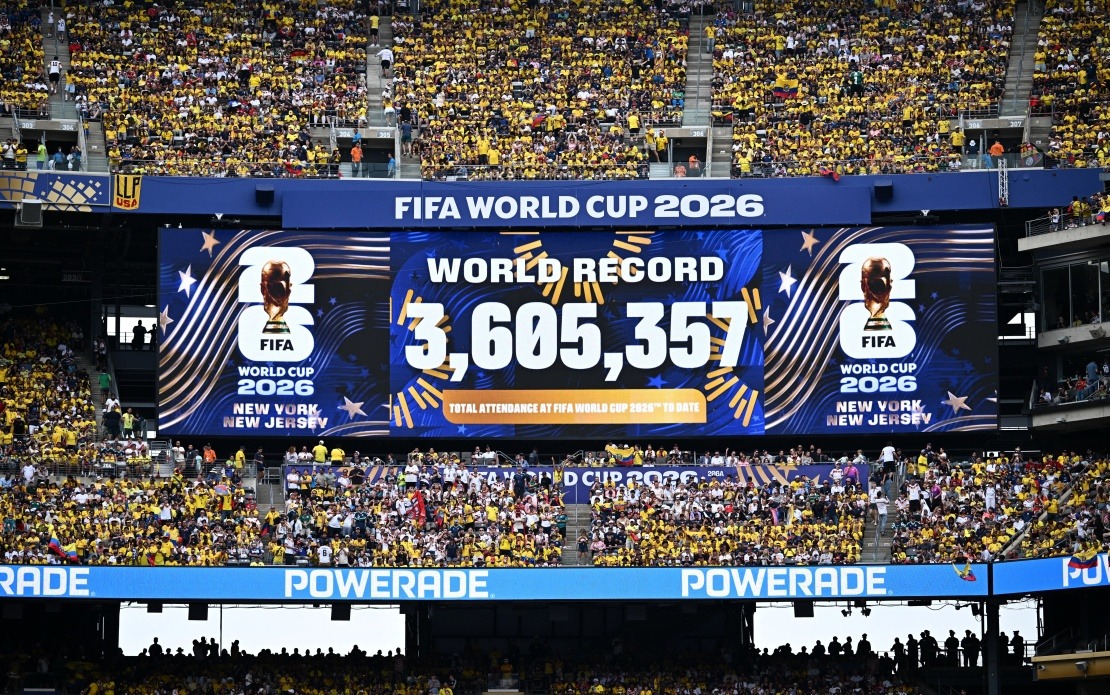
The 2026 FIFA World Cup has etched itself into sporting history by becoming the most-attended tournament ever, shattering a record that stood for more than three decades. The milestone was reached during Germany's encounter against Ecuador in East Rutherford, New Jersey, on Thursday, as the announcement blazed across giant stadium screens and drew thunderous applause from supporters. With a cumulative attendance of 3,605,357 spectators, the tournament has already surpassed the previous benchmark of nearly 3.6 million fans set during the 1994 World Cup held in the United States.
The significance of this achievement cannot be overstated, particularly when considering the tournament structure. The 1994 edition, which held the previous record, was contested across 52 matches. The current tournament operates under an expanded format featuring 80 matches in total, meaning 48 games remain on the schedule. Should attendance patterns continue at their current trajectory, the final tally could potentially reach nearly double the 1994 figure, fundamentally reshaping expectations around the tournament's commercial and cultural impact.
The venue itself underscores North America's deep appetite for world football. East Rutherford, situated in New Jersey across the Hudson River from Manhattan, has proven to be a compelling draw for spectators. The announcement during the Germany versus Ecuador match created a moment of shared jubilation among those present, illustrating how football has transcended traditional boundaries in the region and drawn diverse audiences into stadiums across the 16 host cities.
Facility utilisation rates demonstrate the extraordinary public engagement with the tournament. Organisers reported that stadiums have operated at more than 99 per cent capacity on average, a figure that reveals sustained consumer enthusiasm rather than isolated pockets of interest. This consistency across multiple venues suggests that the tournament's appeal has reached saturated levels in North American markets, drawing fans who might not traditionally follow football with such intensity.
FIFA President Gianni Infantino characterised the record as a reflection of football's universal capacity to unite people across cultural and geographical boundaries. He emphasised that the atmosphere within the 16 host cities has been exceptional, noting scenes of celebration and communal joy that extend beyond the matches themselves. This observation carries weight given that it comes from someone positioned to observe tournament dynamics across multiple venues and diverse demographic segments.
For Southeast Asian observers, the attendance surge offers valuable perspective on evolving global football markets. The region has long invested in improving stadium infrastructure and fan experiences, partly inspired by major tournaments held elsewhere. The 2026 figures suggest that investment in venues, accessibility, and the matchday experience can drive unprecedented participation rates, lessons potentially applicable to future regional competitions and domestic league development.
The expanded tournament format itself has proven instrumental in generating such impressive numbers. With 48 additional matches compared to traditional World Cup structures, there are simply more opportunities for fans to attend live events. However, attendance figures exceeding 99 per cent capacity indicate that supply constraints have become apparent, suggesting demand has outstripped available seating across most fixtures. This dynamic creates interesting implications for future tournament planning and stadium capacity requirements.
The North American hosting arrangement, spanning the United States, Canada, and Mexico, has mobilised the entire continental football community. The tri-nation setup provides geographical diversity that enables fans across a vast region to attend matches without undertaking prohibitive travel commitments. This accessibility factor likely contributes significantly to the record-breaking attendance figures, as fans from Vancouver to Mexico City can reach relevant venues within manageable distances.
The Germany versus Ecuador fixture that served as the backdrop for announcing the record carries its own narrative weight. Germany, a football powerhouse with a substantial diaspora and traditional support base in North America, attracted considerable interest. Ecuador's participation as a South American qualifier demonstrates how the tournament structure encourages diverse geographic representation, expanding the potential fan bases that might attend any given match.
Looking forward, the trajectory established through the 2026 tournament may reshape future World Cup planning. Organisers will likely analyse which factors drove such exceptional attendance—whether host nation location, venue quality, marketing campaigns, or the expanded format itself proved most influential. This data will inform decisions about future tournament structures and venue selection for subsequent World Cups scheduled to take place in different regions.
For Malaysian and Southeast Asian football stakeholders, the 2026 figures underscore a broader trend of football's expanding mainstream appeal in markets traditionally dominated by other sports. The region's own upcoming opportunities to host major tournaments or develop franchise-based competitions will benefit from understanding what factors drive the kind of sustained attendance witnessed in North America. The nearly complete stadium utilisation suggests that when conditions align—accessible venues, appealing matchups, and effective promotion—audiences will emerge in extraordinary numbers.

