The National Security Council (MKN) rolled out a fuel assistance programme in Renggam on June 25, distributing RM5 vouchers to 200 motorcyclists in what officials framed as a concrete expression of government support for low-income transportation workers. The initiative, unveiled during the Jiwa@Komuniti MADANI Sembang Santai World Cup Edition programme, reflects a targeted effort to address the transport cost pressures faced by daily-wage earners and small-business operators who depend on motorcycles for their livelihoods across Malaysia's smaller towns.
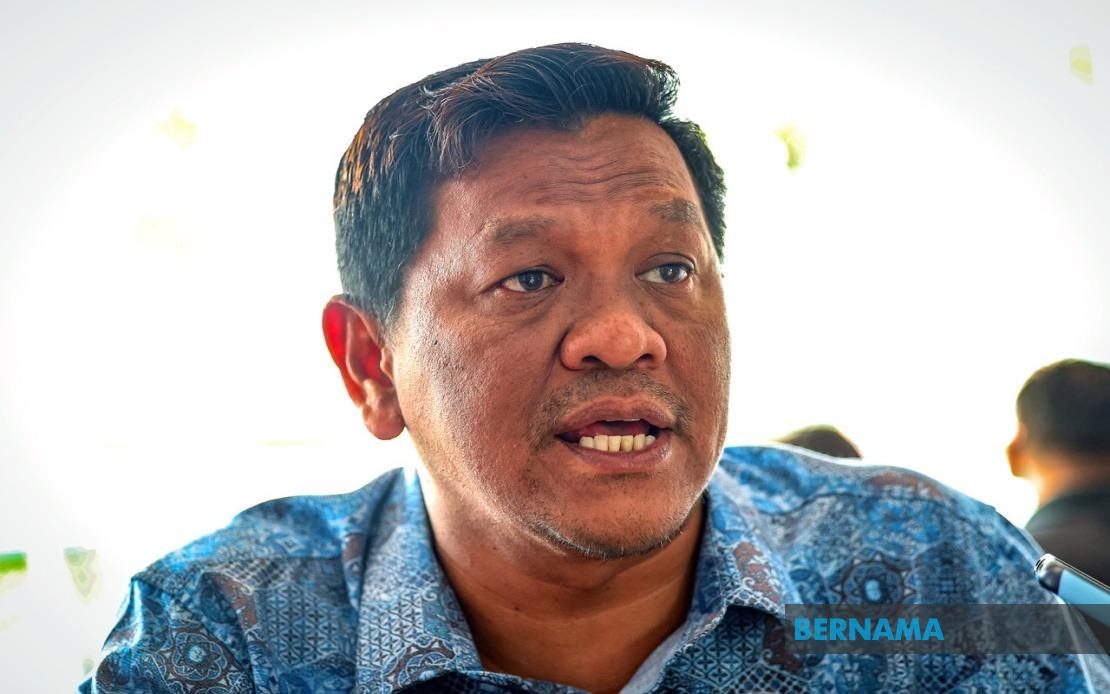
Abdullah Izhar Mohamed Yusof, political secretary to the Communications Minister, characterised the voucher distribution as one strand of the government's wider commitment to citizen welfare and community cohesion. Speaking to journalists at the Kluang venue, he stressed that such interventions aim to demonstrate active concern for grassroots constituencies while reinforcing social unity at a time when economic pressures are affecting household budgets across the country. The programme's emphasis on regular repetition signals official intent to embed such assistance schemes into routine governance rather than treating them as one-off gestures.
Beyond the tangible voucher handout, the Renggam event functioned as a broader dialogue platform between state apparatus and local residents. The government deployed representatives from the National Security Council, the Information Department (JaPen), and the Department of Community Communications (J-KOM) to facilitate structured conversations with community members. This multi-agency presence underscores how contemporary Malaysian governance increasingly views public engagement as requiring coordinated messaging and information management, particularly in securing buy-in for official narratives and policies.
According to Abdullah Izhar, one core objective of such programmes is to furnish citizens with dependable government information while creating safe channels for residents to articulate their concerns and recommend changes to local policy frameworks. In a media landscape fractured by misinformation and competing narratives, government officials regard these face-to-face sessions as critical infrastructure for establishing trust and ensuring that accurate accounts of policy intentions and outcomes reach target populations. The emphasis on "authentic information" reflects tacit acknowledgement that information credibility remains contested in Malaysian public discourse.
The administrator outlined a strategic ambition to scale such outreach initiatives nationwide, aiming to universalise access to official communications, clarify government policy architecture, and ensure equitable distribution of welfare and development benefits. This language signals recognition that perceptions of unequal treatment or exclusion from assistance programmes can corrode political legitimacy, particularly in smaller towns and rural areas where government presence is sometimes episodic. By institutionalising grassroots engagement, officials hope to forge durable relationships with communities that often feel peripheral to centre-based policymaking.
Among voucher recipients was M. Raja, a 56-year-old resident of Taman Sri Jaya and father of five, who welcomed the assistance while articulating a hope for expansion and regularity. His comment that monthly vouchers would be "great" while expressing satisfaction with the current allocation reflects the delicate balance low-income Malaysians navigate between gratitude for state support and acknowledgement of ongoing financial strain. His remarks encapsulate the persistent vulnerability of working families for whom fuel costs represent a non-negotiable expense consuming a disproportionate share of income.
Similarly, Hee Eeck Kwe, a 66-year-old from Kampung Baru, framed the initiative as evidence that rural and less-developed communities were being actively included in government assistance schemes. His emphasis on feeling "not left out" speaks to anxieties about spatial inequality in Malaysia, where rural dwellers and inhabitants of smaller towns sometimes perceive themselves as receiving less policy attention and resource allocation than urban centres. Government outreach in such locations thus carries symbolic weight beyond the material value of the vouchers themselves, functioning as a reassurance of belonging within the national welfare compact.
The Renggam programme exemplifies how contemporary Malaysian governance increasingly blends material assistance with information provision and dialogue orchestration. Rather than simply distributing cash or vouchers through bureaucratic channels, the government increasingly emphasises the relational and communicative dimensions of welfare delivery. This reflects both pragmatic recognition that legitimacy requires visible state engagement and strategic awareness that public support for government depends on citizens believing they have voice in policy conversations and access to unmediated official communication.
For motorcyclists in smaller towns across Malaysia, fuel costs remain an urgent economic concern, particularly given volatility in global energy markets and the downstream impact on household budgets and business viability. While RM5 vouchers represent modest relief, their symbolic value as evidence of government attentiveness may prove as significant as their material impact. Renggam's experience demonstrates a deliberate strategy of periodic, visible intervention in grassroots constituencies—a calculated approach to political capital maintenance that acknowledges the power of demonstrable state presence in shaping citizen attitudes toward governance.

