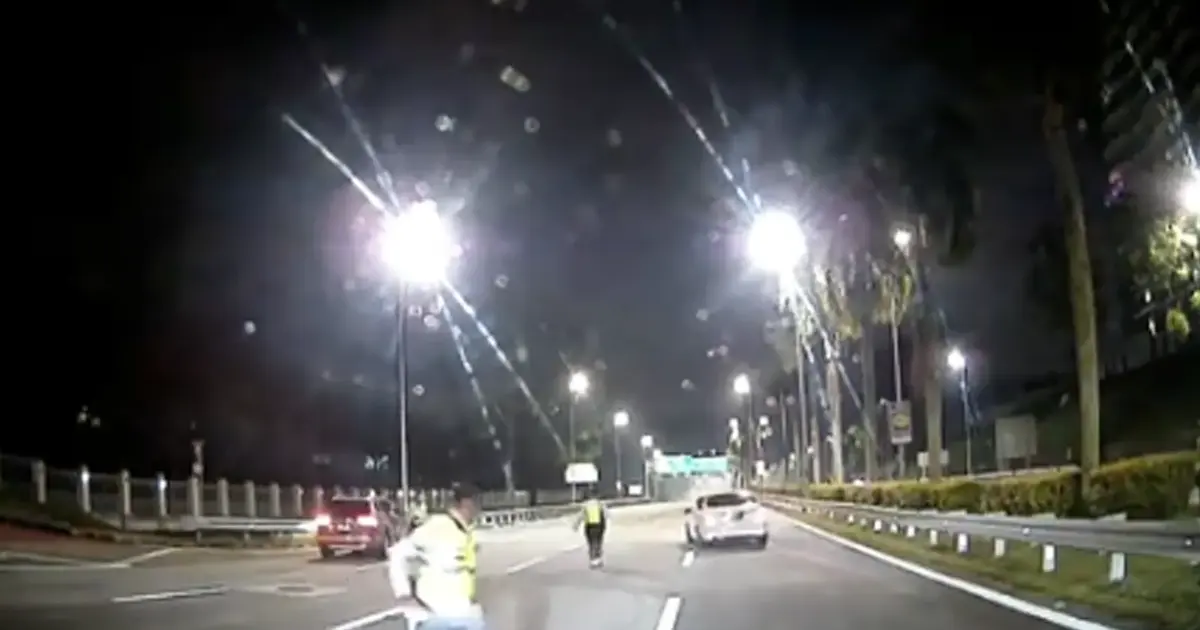
A 20-year-old man found himself in police custody today after an incident at a roadblock where he allegedly displayed suspicious behaviour before driving through cordon lines despite clear instructions from law enforcement officers to halt his vehicle.
The young motorist's decision to proceed past the checkpoint rather than comply with police directions has triggered formal arrest procedures. Officers conducting the roadblock observed what they characterised as nervous conduct from the driver before he accelerated forward, pushing through the barrier that had been established to check vehicles and verify documentation.
Roadblocks remain a standard enforcement tool deployed across Malaysia's road network to improve traffic safety, verify vehicle registrations, and check driver licences. These checkpoints serve multiple regulatory functions, from detecting uninsured vehicles to identifying drivers under the influence or those with outstanding traffic violations. The public's cooperation at these points is essential for the smooth operation of traffic management systems nationwide.
Non-compliance with police directives at roadblocks represents a serious matter in traffic law enforcement. When motorists refuse to stop or attempt to drive past checkpoints, they not only obstruct the officers' ability to perform their duties but also potentially endanger other road users. The consequences of such actions can escalate rapidly, as law enforcement must consider the safety implications of any pursuing vehicle and other traffic on the road.
The driver's apparent nervousness during the encounter raises questions about his state of mind at the time. Whether this stemmed from anxiety about facing a citation, concerns about vehicle documentation, or other factors remains part of the investigation. Police conduct interviews and gather evidence to determine the full circumstances surrounding the incident and what motivated the motorist to refuse compliance.
This arrest underscores the ongoing challenges Malaysian authorities face in maintaining order at traffic enforcement points. While most drivers cooperate with roadblock procedures, occasional incidents of non-compliance require officers to take decisive action to preserve the integrity of enforcement operations. The decision to arrest sends a clear message about the consequences of defying lawful police orders.
For motorists across Malaysia and the broader region, encounters with roadblocks are frequent occurrences. Drivers are routinely advised to maintain proper documentation, including valid driving licences and vehicle registration papers, to facilitate quick processing at checkpoints. Understanding the legitimate authority of police to conduct these operations helps smooth traffic flow and reduces tensions between enforcement officers and the public.
The case also highlights the importance of driver training and public awareness campaigns about road safety protocols. Educational initiatives emphasising the reasons for roadblocks and the legal obligations they entail could potentially reduce confrontational situations. When citizens understand that these checkpoints exist to protect community safety rather than purely generate revenue, compliance tends to improve.
Beyond the immediate incident, this arrest contributes to broader discussions about police-public relations and the enforcement of traffic regulations. Balancing strict adherence to law with proportionate responses requires careful judgement from officers in the field. Roadblock operations must be conducted professionally and transparently to maintain public confidence in law enforcement institutions.
The apprehension also reflects Malaysia's continued focus on road safety metrics. Statistics consistently demonstrate that driver compliance, vehicle maintenance standards, and adherence to traffic regulations significantly impact accident rates. Every enforcement action, including arrests for roadblock violations, forms part of a comprehensive strategy to reduce fatalities and serious injuries on Malaysian roads.

