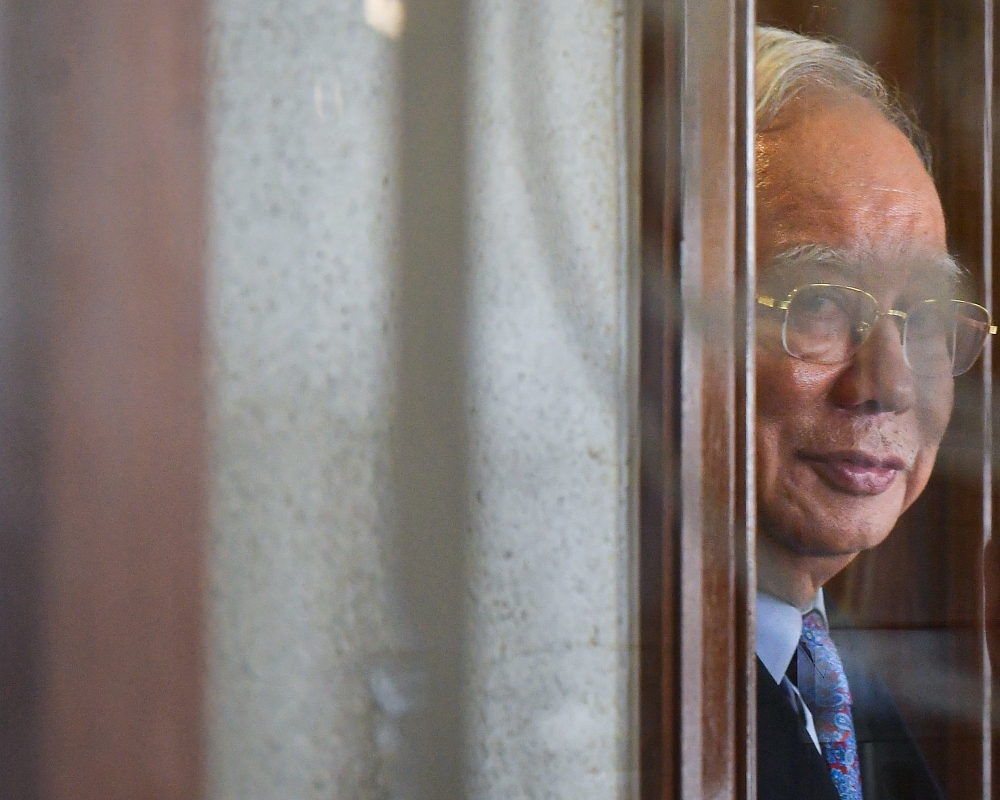
During testimony at the High Court, a senior financial fraud investigator acknowledged a significant gap in the 1MDB inquiry, disclosing that he had not verified the ultimate destination of US$620 million after it was ostensibly returned by former Prime Minister Najib Abdul Razak. This admission came as the ongoing legal proceedings continue to examine one of Southeast Asia's largest financial scandals, which has captivated Malaysian public attention and raised concerns about investigative rigour across the region.
The investigator, Richard Templema, was being questioned during court proceedings when the critical oversight emerged. His testimony suggests that while authorities confirmed the money had been returned to Malaysia, they did not conduct a subsequent inquiry into whether those funds were subsequently diverted elsewhere. This gap in the investigative process could potentially have implications for understanding the full trajectory of misappropriated 1Malaysia Development Berhad resources and identifying other parties who may have benefited from the initial misdeeds.
The 1MDB scandal remains one of the most significant financial crimes in the country's modern history. The development fund, established under Najib's administration, became the vehicle for what investigations have revealed as massive embezzlement involving billions of ringgit. The case has implicated numerous high-ranking officials and international entities, while also drawing scrutiny from American authorities who launched parallel investigations into money laundering and fraud connected to the scheme.
The revelation of investigative gaps is particularly significant because it highlights potential weaknesses in how complex financial crimes have been pursued in Malaysia. Tracing money through multiple jurisdictions and identifying secondary movement of funds requires meticulous documentation and cross-border cooperation, both of which present challenges for domestic authorities working with limited precedent in cases of this magnitude. The admission that crucial follow-up verification was not conducted raises questions about resource allocation and methodology in major financial fraud investigations.
For Malaysian readers, the implications extend beyond Najib's personal legal jeopardy. The efficacy of anti-corruption and financial crime detection systems underpins investor confidence in the country's financial sector. When investigative practices are revealed to have gaps, particularly in high-profile cases, it can undermine both domestic and international perceptions of institutional capacity. This becomes especially relevant as Malaysia seeks to strengthen its standing in global financial governance frameworks and attract legitimate foreign investment.
The investigation into 1MDB has sprawled across multiple countries, involving American law enforcement, Swiss authorities, and intelligence agencies in Singapore and the region. The complexity of international fund flows means that Malaysian investigators must often coordinate with foreign counterparts, each operating under different legal frameworks and evidentiary standards. When local investigators fail to conduct comprehensive follow-up verification, it can complicate international cooperation and may result in missed opportunities for asset recovery or identifying additional culprits.
Templema's testimony is likely to feature prominently in defence arguments, as Najib's legal team seeks to challenge the prosecution's case. If investigators failed to confirm the rerouting of substantial funds, the defence may argue that this absence of evidence constitutes evidence of absence, potentially complicating the Crown's narrative about the breadth and mechanics of the alleged misappropriation. This illustrates how investigative deficiencies in high-stakes cases can ripple through the judicial process, affecting both prosecution and defence strategies.
The 1MDB affair has had lasting consequences for Malaysian politics and governance. Following the controversy and subsequent change of government, the country has undertaken various institutional reforms aimed at strengthening financial oversight and anti-corruption mechanisms. However, revelations such as Templema's admission suggest that implementation and execution of these reforms remain uneven. Building sustainable capacity in financial investigation requires not only policy directives but also training, resource provision, and accountability for investigative practices.
For the broader Southeast Asian context, Malaysia's experience with 1MDB has served as a cautionary tale about the risks of inadequate oversight in state enterprises and development funds. Regional neighbours have studied the case to fortify their own governance mechanisms. However, if investigative processes are demonstrated to be incomplete or methodologically flawed, it sends a problematic signal about the robustness of anti-corruption efforts across the region. International partners watching Malaysia's handling of the case evaluate regional capacity for combating financial crime, which in turn affects regional security partnerships and trade relationships.
The court proceedings are expected to continue, with additional witnesses providing testimony regarding various aspects of the financial flows and decision-making processes within 1MDB. Each revelation about investigative gaps or oversights adds another layer of complexity to what was already an extraordinarily intricate case. For observers tracking governance developments in Malaysia, the case underscores the ongoing challenge of building institutional capacity equal to the sophistication of modern financial crimes, particularly when such crimes involve international dimensions and coordinated participation by state actors.

