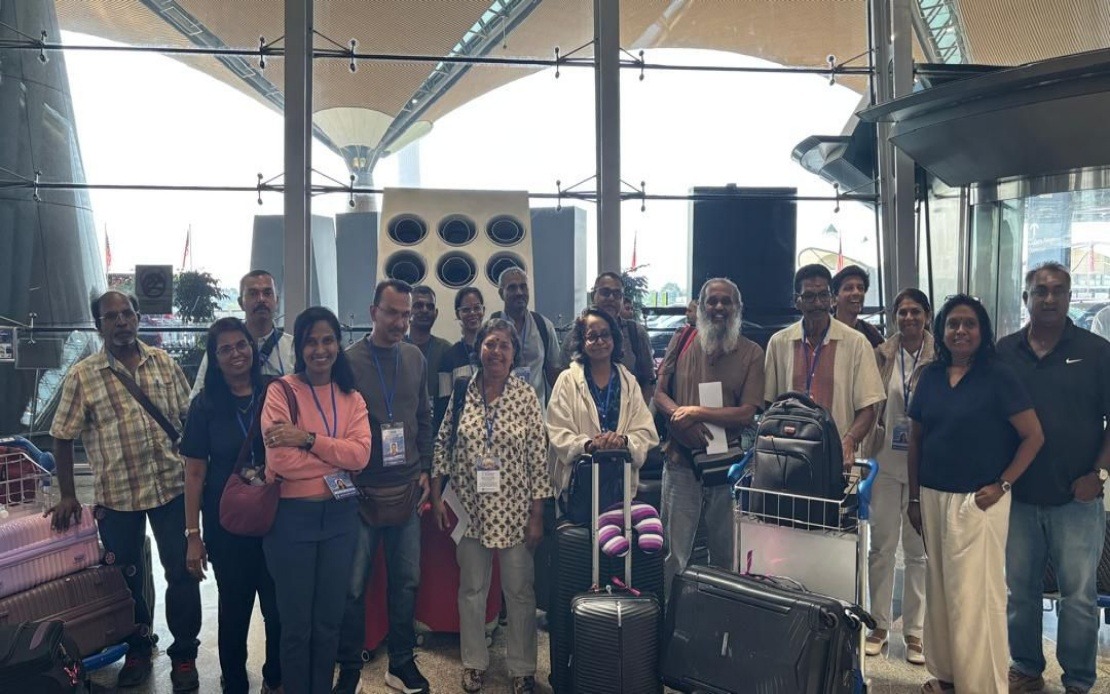
A group of 17 Malaysians trekking to Mount Kailash in Tibet have gone silent for more than a day after catastrophic flash floods struck the Nepal-Tibet border region on August 26, prompting their families and the Malaysian government to launch urgent efforts to locate them. The pilgrims, who were part of a tour organised by Nepal-based Fishtail Tours & Travels, last communicated at approximately 8.18 am Nepal time on August 26 as they approached the Nepal-Tibet Immigration Checkpoint. Since then, all connection with the group has ceased, leaving relatives increasingly anxious about their safety and whereabouts.
Among the missing pilgrims are members of several Malaysian families who embarked on their journey to one of Asia's most sacred mountains. R. Logadashini reported that four of her immediate family members are with the group: her father S. Raman, aged 59, mother M. Neelavany, aged 54, uncle S. Murukan, aged 60, and aunt G. Padmahwathi, aged 58. The delegation had arrived in Nepal on August 23 with plans to conclude their pilgrimage on September 5. The last personal communication Logadashini received was a WhatsApp message at 8.40 am Malaysian time before the group entered the affected zone.
The timing of the floods proved particularly dangerous as the group was positioned directly in the path of the disaster. When heavy rainfall combined with a glacial collapse in Nepal's Rasuwa and Nuwakot districts, flash floods rapidly inundated the region, simultaneously destroying communication infrastructure and severing the main roads connecting the area to Kathmandu. This dual catastrophe effectively isolated the pilgrims from outside assistance while making it impossible for authorities to receive updates about their condition. The disrupted routes also delayed rescue operations, as teams struggled to reach affected areas through blocked terrain.
The Malaysian Ministry of Foreign Affairs, known as Wisma Putra, confirmed that approximately 55 Malaysians have been reported as uncontactable in the aftermath of the floods, though this figure includes the 17 pilgrims in the missing group plus others potentially affected by the disaster. Despite the scale of the situation, the ministry emphasised that no official confirmation of Malaysian deaths has been received. The Malaysian Embassy in Kathmandu has mobilised its resources to work alongside Nepalese authorities, local search and rescue teams, tour operators, and other agencies in an attempt to verify the safety status and locate the missing Malaysians.
Prime Minister Datuk Seri Anwar Ibrahim responded swiftly by directing all relevant government agencies to prioritise locating and contacting affected Malaysians. The government activated diplomatic missions in both Kathmandu and New Delhi to coordinate assistance efforts. This heightened governmental response reflects the serious nature of the crisis and Malaysia's commitment to safeguarding its citizens abroad during emergencies. The dual embassy engagement suggests coordination across a broader regional scope, recognising that information about the pilgrims might emerge through multiple diplomatic channels.
The Nepal-Tibet border route where the floods occurred is one of the principal passages used by religious pilgrims journeying to Mount Kailash, as well as trekkers heading toward Mount Everest. The region's popularity for pilgrimage and mountaineering activities means that disasters here can affect nationals from numerous countries simultaneously. The geographical isolation of these high-altitude routes, combined with their distance from major urban centres and medical facilities, compounds the challenges faced by rescue teams and heightens risks for those stranded in severe weather conditions.
However, contrasting with the situation of the missing 17, a separate group of Malaysian pilgrims has been confirmed safe. This contingent, comprising 56 individuals including 39 Malaysians, four Singaporeans, and three Canadians, was led by renowned Malaysian mountaineer Datuk N. Mohanadas, who has established his reputation through numerous successful Everest expeditions. Mohanadas's group was positioned on a different route that escaped the flooding's impact. According to Mohanadas, although his party was aware of the catastrophic downpour, glacial collapse, and casualties occurring at the border region, their particular pilgrimage route remained unaffected and safe.
Modhanadas reported that his group had commenced the first of three planned pilgrimage circuits around Mount Kailash, a religious practice central to Hindu, Buddhist, and other spiritual traditions. The successful progress of Mohanadas's party demonstrates that alternative routes through the region remain passable, and that not all Malaysian pilgrims in the broader area were caught in the disaster. This distinction between the imperiled group and the safe group underscores how proximity to the specific flood zone determined whether pilgrims could continue or became stranded.
The unfolding situation highlights the inherent risks involved in conducting religious pilgrimages and mountain expeditions in remote border regions where infrastructure remains underdeveloped and natural disasters can rapidly escalate into humanitarian crises. The Nepal-Tibet border zone, despite its spiritual significance for millions of believers, presents considerable logistical challenges for rescue operations due to terrain, altitude, weather volatility, and cross-border coordination complexities. Malaysian pilgrims and their families face a tense waiting period as authorities work to re-establish contact and verify the status of the missing group.
For the Malaysian government and diplomatic corps, this incident underscores the importance of maintaining robust communication protocols with tour operators working in high-risk regions and ensuring that Malaysians travelling internationally, particularly to geographically challenging destinations, maintain regular contact with their families and embassy representatives. The contrast between the lost 17 and the confirmed safe 56 demonstrates that outcomes in such disasters often depend on precise location and timing. As search and rescue efforts continue in Nepal, Malaysian authorities remain engaged in intensive information-gathering to determine the fate of the pilgrims and provide families with urgent clarity about their loved ones' circumstances.

