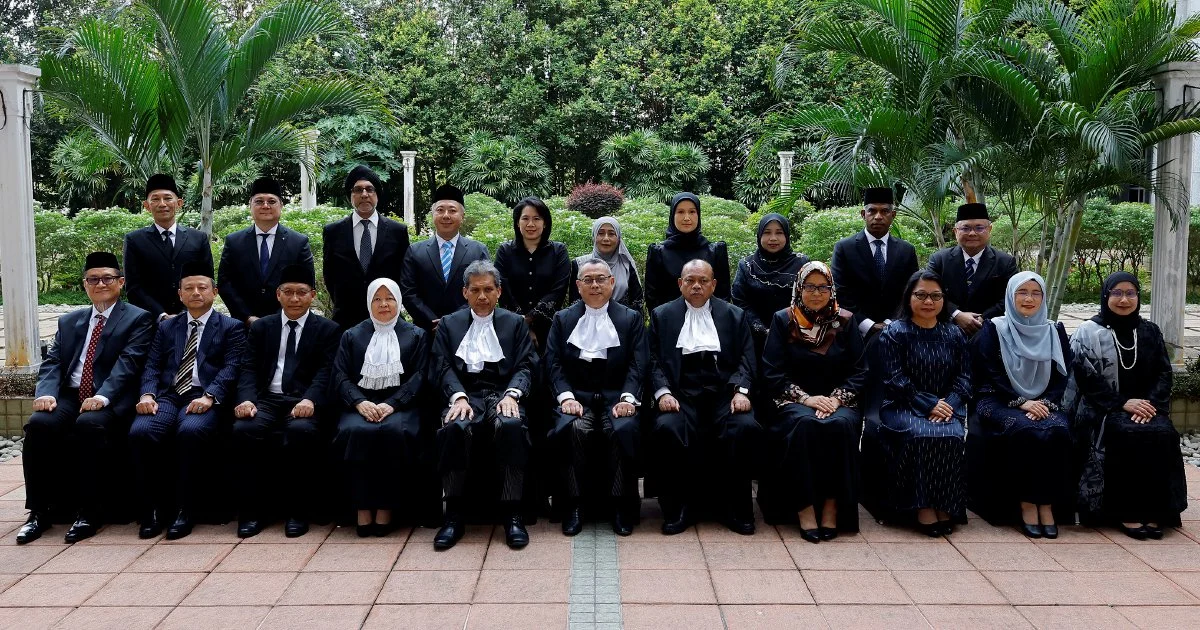
Malaysia has unveiled a fresh batch of 17 judicial commissioners elevated to the High Court bench, reflecting the judiciary's ongoing efforts to strengthen its bench strength and inject new talent into the judicial system. The appointment ceremony took place in Putrajaya, the administrative capital, and represents a notable development in the country's judicial expansion at a time when the courts face mounting caseloads and pressure to expedite proceedings.
Among those appointed is the daughter of a former president of the Court of Appeal, a prominence that underscores the interconnected nature of Malaysia's legal profession where distinguished judicial careers often run across generations within families. Her elevation to the bench continues a family legacy in the higher judiciary and brings fresh perspectives shaped by her own legal experience and training.
The appointment of judicial commissioners serves a crucial function within Malaysia's three-tiered court hierarchy. These officers occupy an intermediate position between the subordinate courts and the higher judiciary, handling cases of significant complexity and importance. As Malaysia's legal system grapples with an ever-growing volume of litigation spanning commercial disputes, family law, criminal matters, and administrative challenges, the injection of additional judicial talent helps distribute workload more equitably across the system.
The 17 appointees comprise both practising lawyers with substantial track records in the profession and serving officers within the judicial and legal services. This mixed composition reflects a deliberate strategy to balance external expertise garnered from private practice with institutional knowledge held by those already embedded within the court structure. Lawyers transitioning from private practice bring fresh jurisprudential approaches and commercial acumen, while career judicial officers contribute continuity and familiarity with procedural nuances.
Judicial appointments in Malaysia have historically been a matter of careful institutional consideration, with the Judicial Appointments Commission playing a guiding role in identifying suitable candidates. The rigorous vetting process examines not only legal expertise and courtroom experience but also judicial temperament, ethical standing, and potential contributions to the bench. Each appointment therefore represents a confidence in the individual's ability to interpret and apply law fairly and competently.
The timing of these appointments carries particular significance for Malaysia's courts. The judicial system has faced considerable pressure in recent years to clear backlogs and reduce case disposal times, particularly in commercial and civil litigation where delays can impose substantial economic costs on businesses and individuals. Additional judicial commissioners can help distribute caseloads more effectively and accelerate the resolution of disputes, contributing to improved access to justice.
For practising lawyers, these appointments also carry broader implications. They represent career advancement opportunities that reward excellence in the profession and attract talented individuals to pursue judicial office. The elevation of established practitioners strengthens the judiciary by drawing from a pool of experienced legal minds who understand both the theory and practical application of law across diverse areas of practice.
The gender composition of this appointment round also warrants attention. The inclusion of the daughter of the former Court of Appeal president signals the judiciary's continuing evolution in terms of gender representation on the bench. Malaysia has progressively increased the number of female judicial officers over the past decade, though challenges remain in achieving fuller representation at the most senior levels of the judiciary.
These new judicial commissioners will assume their duties at a moment of significant transformation within Malaysia's legal ecosystem. The courts have undertaken various reform initiatives aimed at modernising procedures, embracing technology for case management, and improving the efficiency of trials. Fresh appointees with contemporary legal training and exposure to evolving international best practices can contribute meaningfully to these modernisation efforts.
The broader appointment strategy also reflects Malaysia's commitment to maintaining judicial independence while ensuring the bench remains responsive to contemporary legal challenges. As society evolves and new categories of disputes emerge—from data privacy matters to cryptocurrency-related conflicts—the judiciary requires commissioners equipped to grapple with novel legal issues and develop jurisprudence appropriate to modern circumstances.
Regionally, Malaysia's judicial strengthening efforts resonate across Southeast Asia, where several nations face similar pressures of expanding caseloads and the need to modernise court systems. The approach to judicial appointments and development pursued here may offer lessons for neighbouring jurisdictions contemplating similar institutional reforms.
The appointment of these 17 judicial commissioners represents not merely an administrative exercise but a substantive investment in judicial capacity. Their work in the coming years will shape the trajectory of Malaysia's legal system and influence the experiences of countless individuals and organisations seeking recourse through the courts. As they assume their benches, they carry with them both the expectations of the profession and the responsibility to uphold the judiciary's foundational commitment to the rule of law and equal access to justice.

