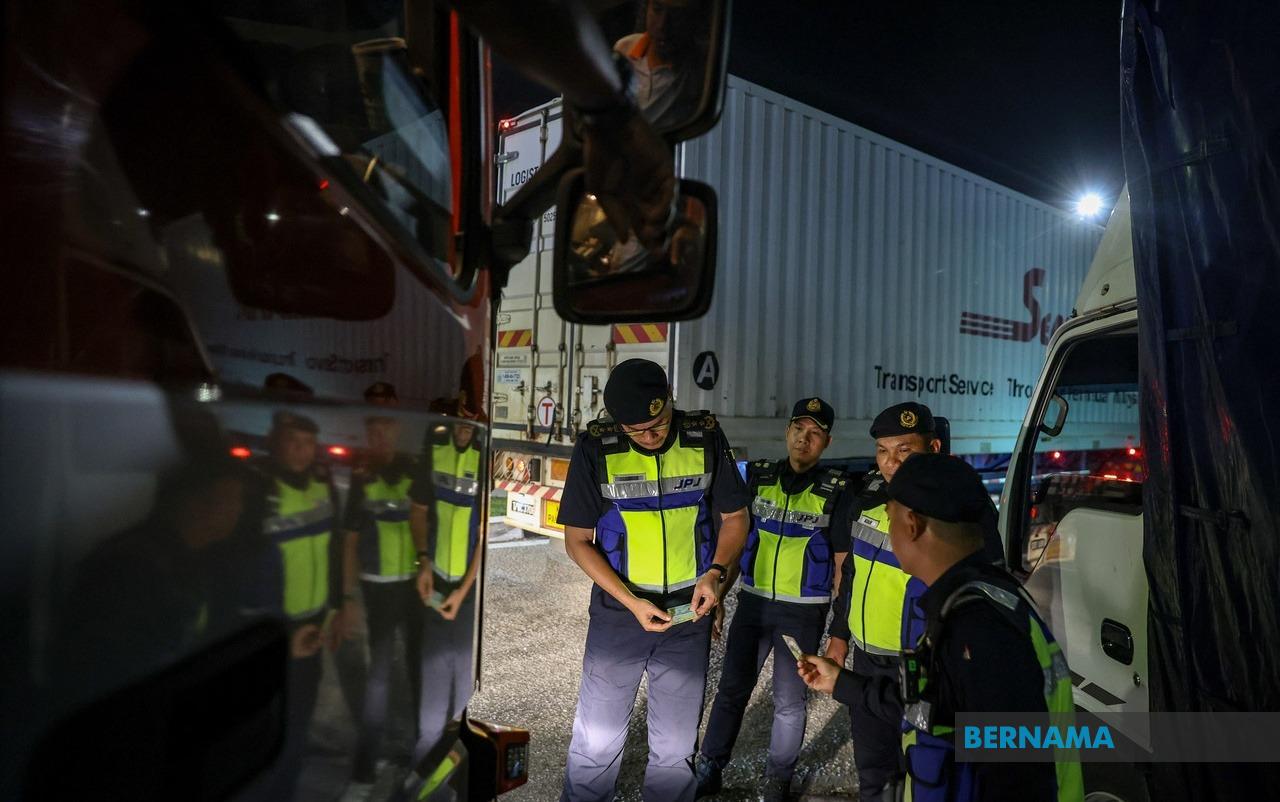
Authorities in Johor have uncovered a concerning level of drug use among commercial vehicle drivers, with 16 individuals testing positive during an intensive screening programme that began on July 1 and concluded late on July 10. The discovery emerged from a coordinated enforcement initiative conducted across multiple locations throughout the state, reflecting growing concerns about substance abuse within the transport sector and its implications for road safety across Malaysia's busy highways.
The operation, which was jointly executed by the Johor Road Transport Department (JPJ), Royal Malaysia Police (PDRM), the National Anti-Drug Agency (NADA), and highway operator PLUS Malaysia Berhad, represented a comprehensive attempt to tackle drug-related violations among drivers of commercial goods vehicles and public transport operators. Johor JPJ director Zulkarnain Yasin disclosed the results after conducting screening activities at the Pagoh rest and service area southbound, emphasising the multi-agency approach to addressing what has become an increasingly serious public health and safety issue on Malaysian roads.
Of the 164 drivers who underwent mandatory urine screening, 10 tested positive for methamphetamine, with three individuals showing traces of crystal methamphetamine, commonly known as "ice." Two drivers tested positive for ganja, while one screened positive for morphine. The prevalence of methamphetamine and its crystal form among commercial drivers is particularly troubling given the stimulant properties of these substances and their potential to impair judgment and reaction times during long-distance driving operations.
The screening programme took place at strategically selected enforcement points, including a highway rest and service area, the JPJ Enforcement Station (SPK), and a bus terminal, allowing authorities to cast a wide net across different segments of the commercial transport sector. This multi-location approach proved effective in identifying violations that might otherwise have gone undetected, demonstrating the value of coordinated enforcement activities that combine resources from multiple government agencies with the participation of private sector operators.
Legal consequences now await those who tested positive. Under Section 56(4) of the Road Transport Act 1987, the JPJ possesses authority to suspend or revoke the vocational licences held by drivers found to have used illegal drugs. Such action effectively removes these individuals from commercial transport operations, at least temporarily, and represents a significant consequence for professional drivers whose livelihoods depend on maintaining valid driving credentials. The licensing sanction serves as both a punitive measure and a deterrent against future drug use within the profession.
Beyond the drug-related findings, the operation revealed a disturbing volume of traffic and vehicle regulation violations. Authorities detected 707 instances of drivers operating without valid driving licences, a figure that suggests substantial non-compliance with basic licensing requirements. Road tax violations were equally prevalent, with 626 cases of expired road tax and 574 instances of expired vehicle insurance coverage identified during the same period.
Vocational and commercial vehicle licensing breaches compounded these concerns, with 128 cases involving the absence of a Goods Vehicle Licence (GDL) and a further 14 instances of expired GDL credentials. Authorities also recorded 113 instances of overloaded vehicles, a serious safety concern given the structural and braking implications of exceeding vehicle weight limits on highways. An additional 30 cases involved expired driving licences and 51 involved expired PUSPAKOM inspection discs, with 490 other miscellaneous traffic offences completing the enforcement tally.
Technical violations related to vehicle condition standards demonstrated widespread maintenance and modification non-compliance. Inspectors identified 39 cases involving unauthorised vehicle modifications, 30 involving non-compliant tyres, and 928 other technical breaches. These findings suggest that substantial portions of the commercial transport fleet may be operating with compromised safety standards, creating potential hazards for other road users and passengers alike.
The scope and scale of these violations across a single ten-day operation raises broader questions about enforcement consistency and compliance culture within Johor's commercial transport sector. The sheer number of licensing and documentation breaches, totalling in the thousands when all categories are combined, suggests that regulatory oversight may be inadequate or that the financial and administrative burden of maintaining compliance may be discouraging adherence to legal requirements among some operators.
For Malaysian road users, particularly those sharing highways with commercial vehicles, these findings underscore the safety implications of widespread non-compliance. Drivers operating without current insurance, valid licences, or adequate vehicle maintenance create genuine collision and injury risks for fellow motorists. The identification of drug use among professional drivers adds another layer of concern, as impaired commercial vehicle operators present proportionally greater dangers given the size and weight of their vehicles.
The operation also highlights the value of multi-agency coordination in transport enforcement. By combining JPJ regulatory expertise, police enforcement capacity, anti-drug agency resources, and the operational knowledge of highway management companies, authorities achieved a more comprehensive enforcement outcome than any single agency could have delivered. This collaborative model may provide a template for future enforcement initiatives targeting transport sector compliance.
Moving forward, the enforcement outcomes from this Johor operation may prompt broader policy discussions about transport sector regulation, particularly regarding the adequacy of current monitoring mechanisms and the effectiveness of existing penalties in encouraging voluntary compliance. Whether this operation represents a one-off enforcement surge or signals the beginning of sustained, intensive monitoring will likely determine its long-term impact on safety and compliance standards within commercial transport operations across the region.

