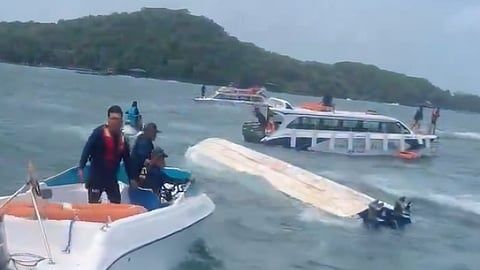
A tragic maritime accident unfolded in southern Vietnam on Saturday when a speedboat ferrying Indian tourists back from an island excursion overturned, claiming 15 lives. The vessel, which had been transporting 32 Indian visitors alongside four crew members, capsized roughly 400 metres from Hon May Rut Ngoai Island, situated near Phu Quoc, Vietnam's largest island and a major regional holiday destination. State media confirmed the fatality count as rescue operations concluded, marking a significant loss of life in what was meant to be a recreational outing.
The incident occurred in one of Southeast Asia's most developed tourism zones. Phu Quoc, nestled in the Gulf of Thailand, has undergone rapid development over the past two decades and now ranks among Vietnam's premier beach resorts. The island attracts millions of tourists annually, both from within Vietnam and internationally, drawn by pristine white-sand beaches, crystalline waters, and expanding resort infrastructure. Hon May Rut island, approximately 10 kilometres south of Phu Quoc's main settlement, forms part of this tourism ecosystem and is frequently included in day-trip itineraries. The region's popularity among Indian travellers has grown substantially as tour operators have expanded offerings to cater to this increasingly affluent source market.
The rescue operation revealed both the responsiveness of nearby mariners and the inherent challenges of maritime emergencies in tourist zones. Eyewitness accounts relayed through Vietnamese media indicated that fishing vessels and other boats in the vicinity responded swiftly, launching immediate rescue efforts even before formal emergency services could be mobilised. However, the rescue proved extraordinarily difficult because numerous passengers became trapped within the capsized hull, complicating efforts by personnel attempting to extract survivors. This scenario—where a vessel overturns with occupants still inside—represents one of the most lethal configurations in maritime accidents, as water ingress and air pocket dynamics create rapidly deteriorating survival conditions.
Official rescue agencies, including border guards, naval units, coast guard vessels, and other emergency response teams, subsequently arrived at the scene and coordinated broader recovery operations. By the conclusion of rescue efforts, authorities confirmed that 21 individuals had been pulled from the water and revived. All 15 victims were recovered from the wreckage, and the surviving injured were transported to nearby medical facilities for treatment. The relatively high recovery rate of survivors—representing 58 percent of those aboard—suggests that the initial response by civilian vessels played a critical role in preventing an even greater loss of life.
The underlying cause of the capsizing remains under investigation, with authorities declining to speculate publicly on preliminary findings. Multiple factors could have contributed to such an incident. Adverse weather conditions, including sudden squalls or choppy sea states common to the Gulf of Thailand during certain seasons, represent one possibility. Vessel design and load distribution, operational decisions regarding passenger capacity or weight placement, and potential mechanical failures also remain within the investigative scope. The speed at which the boat was travelling when it capsized—the vessel was described as a speedboat, suggesting relatively high velocity—may have exacerbated instability if the vessel encountered unexpected wave patterns or if manoeuvres were executed improperly.
This tragedy carries significant implications for Southeast Asia's tourism sector, which has become increasingly reliant on attracting international visitors from South Asia. The incident will likely trigger scrutiny of maritime safety standards applicable to tourist operations throughout Vietnam and potentially across the region. Insurance implications, liability questions, and regulatory responses from Vietnamese authorities will emerge in the coming weeks. Tour operators facilitating Indian tourism to Phu Quoc may face heightened pressure to demonstrate enhanced safety protocols.
For Malaysian travellers and tourism stakeholders, the incident underscores broader questions about maritime safety oversight in the region. Malaysia's own island tourism destinations, concentrated around Sabah and Sarawak as well as Peninsular Malaysia's offshore islands, operate within similar regulatory environments. The accident serves as a sobering reminder that rapid tourism expansion, while economically beneficial, must be accompanied by corresponding investment in safety infrastructure, vessel maintenance standards, crew training, and emergency response capability. Regional cooperation on maritime safety standards could prove valuable in preventing similar tragedies.
The incident also highlights the vulnerability of international tourists undertaking water-based activities in Southeast Asia. Indian tourists represent a rapidly growing demographic in regional tourism, with increasing numbers visiting multiple countries within the ASEAN bloc. Their concentration on leisure activities that involve maritime exposure—island hopping, snorkelling, diving expeditions—creates a statistical concentration of risk. While such activities remain statistically safe when proper protocols are observed, this accident demonstrates the catastrophic consequences when safety systems fail.
The investigation into the Phu Quoc capsizing will likely produce findings applicable throughout the region. Vietnamese authorities will examine operational practices aboard the vessel, qualifications of crew members, maintenance records, weather forecasting procedures, and communication protocols. International maritime classification societies may become involved if the vessel operated under foreign registry or international conventions. The outcome could influence how other Southeast Asian nations regulate tourist boat operations, particularly those serving international clientele in high-volume tourism zones.

