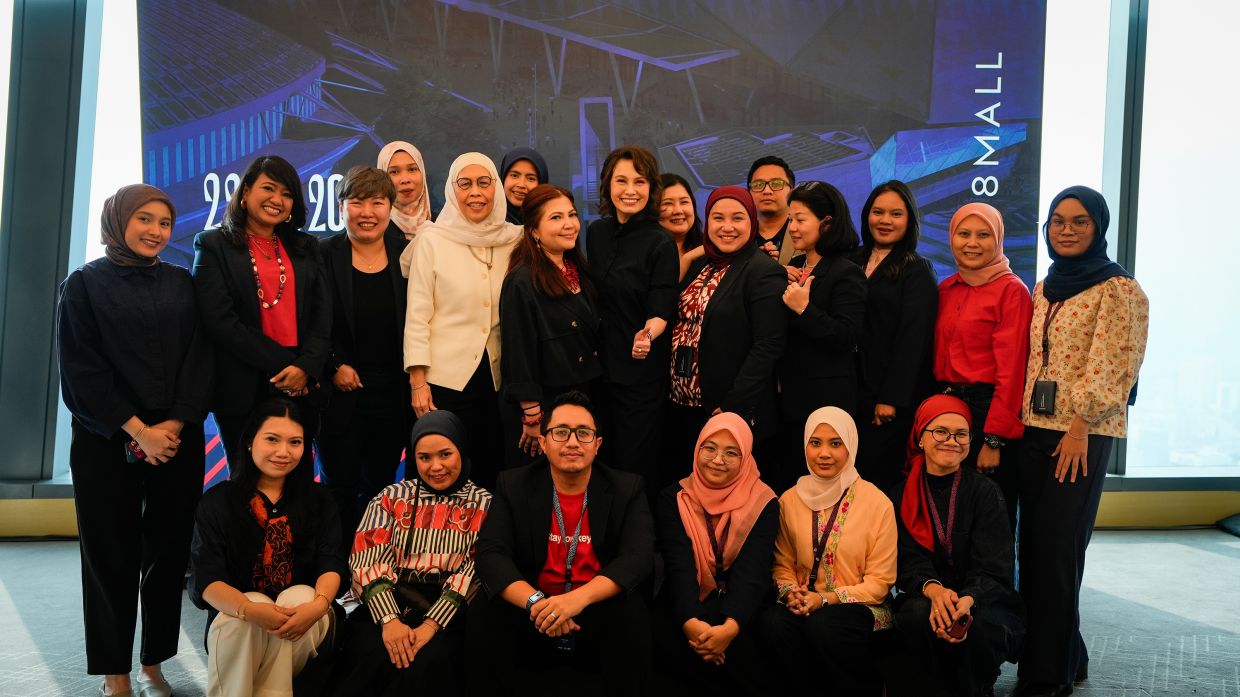
118 Mall has convened its first major stakeholder gathering, bringing together more than 200 retail partners to synchronise preparations for the shopping complex's arrival in November 2026. Held at Park Hyatt Kuala Lumpur, the inaugural Retailers' Get-Together marked a critical moment in the development cycle, uniting merchants spanning fashion, dining, lifestyle and services within what is shaping up as one of Kuala Lumpur's most ambitious retail-integrated projects.
The event was orchestrated by PNB Merdeka Ventures Sdn Bhd, the developer steering the broader Merdeka 118 ecosystem, a mixed-use precinct that extends well beyond retail commerce. By assembling such a substantial roster of confirmed tenants—ranging from global powerhouses like adidas, Converse and Foot Locker to regional and homegrown operators including Village Grocer and the Malaysian Artisan District—the developer has signalled confidence in the venture's viability and its capacity to generate meaningful commercial momentum from day one.
The participating merchant roster underscores the mall's positioning as a venue capable of attracting diverse consumer segments. International lifestyle and fashion brands such as ALDO, Guess and Lacoste sit alongside specialised retailers like Best Denki and BookXcess, with food and beverage anchors including Makanism Foodhall and premium grooming names like Benjamin Barker and CHAGEE Signature. This mix is deliberate: by avoiding homogeneity, the developers aim to create multiple reasons for different visitor cohorts to frequent the space.
According to Datuk Ir. Ts. Izwan Ibrahim, chief executive of PNB Merdeka Ventures, the mall's competitive advantage lies not solely in its retail footprint but in its integration within the broader Merdeka 118 complex. This precinct encompasses hospitality, tourism, heritage and commercial assets—elements that extend 118 Mall's addressable audience far beyond traditional shopping demographics. Luxury hotel guests, business travellers occupying office space, heritage precinct visitors and local residents collectively create a more resilient and layered visitor profile than conventional standalone malls can achieve.
This ecosystem strategy reflects lessons learned from urban retail evolution across Southeast Asia and beyond. Shopping centres no longer compete principally on tenant mix alone; success increasingly depends on whether the venue can position itself as a destination unto itself, where retail constitutes one attraction among several. By embedding 118 Mall within a wider tourism and commercial district centred on Merdeka 118, developers have attempted to insulate the operation from the kind of traffic volatility that has challenged conventional mall operators in Malaysia and the region.
Sue Wang, head of retail for 118 Mall, projected visitor volumes of 22 million in the inaugural year of operation. That figure, if achieved, would position the venue among Malaysia's higher-traffic retail destinations, comparable to established players despite the inevitable ramp-up period new properties typically experience. The projection appears to rest substantially on the precinct's broader draw—the assumption that Merdeka 118's tourism, hospitality and corporate infrastructure will generate a steady stream of potential shoppers.
Central to the mall's identity is the Malaysian Artisan District, a dedicated zone intended to amplify local brand visibility alongside international names. This approach reflects growing consumer appetite across Southeast Asia for authentic, locally-rooted merchandise, particularly among younger and internationally mobile demographics. By carving out dedicated space for Malaysian brands, 118 Mall positions itself as a venue that balances cosmopolitan appeal with cultural specificity—a strategy increasingly recognised as essential for retail venues seeking to capture both tourist and domestic audiences.
The gathering itself served practical functions beyond celebration. Retailers received briefings on marketing infrastructure, including digital display opportunities and event spaces that can be activated for brand promotion and seasonal campaigns. This underscores a wider shift in mall operator strategy: modern shopping centres function as platforms enabling tenant collaboration and joint marketing, rather than merely landlord-tenant relationships. Developers that facilitate such activity enhance tenant profitability and, by extension, secure lease commitments and long-term partnership stability.
For Malaysian retail stakeholders, 118 Mall's imminent arrival introduces a significant new competitive dynamic. The venue's positioning within Kuala Lumpur's evolving urban centre, combined with its integrated precinct approach and anticipated visitor volumes, suggests it will command a material share of consumer traffic and spending. Existing malls and retail operators will need to assess whether their own positioning—whether through specialisation, community focus or differentiated experience—can coexist with or distinguish themselves from 118 Mall's comprehensive offering.
The November 2026 timeline places 118 Mall's opening roughly two years ahead, allowing adequate runway for construction completion, tenant fit-out and pre-launch marketing. For PNB Merdeka Ventures and retail partners, the inaugural gathering serves as a public affirmation of commitment and a mechanism to synchronise the complex choreography required to launch a 300-outlet venue simultaneously. The gathering's scale and composition suggest that merchant confidence in the project remains robust, despite the uncertain macroeconomic environment facing retail sectors across the region.
Moreover, the location adjacent to Merdeka 118 itself carries symbolic weight. The wider precinct represents Malaysia's ambition to create world-class integrated urban destinations that rival regional peers. By hosting this gathering and publicly unveiling its merchant roster, 118 Mall has positioned itself as a cornerstone asset within that vision—one that must deliver not only commercially for its operators and tenants, but also in terms of urban experience and community value as Kuala Lumpur's downtown core continues its evolution.

