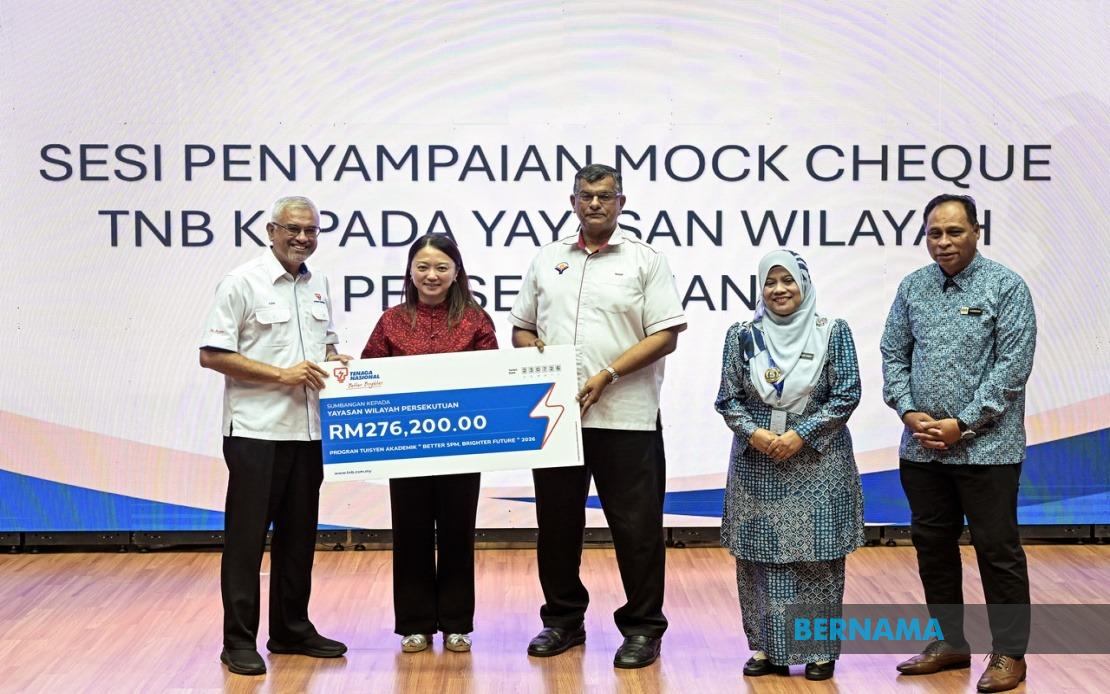
Kuala Lumpur's education authorities have rolled out an ambitious tuition support scheme aimed at helping lower-income families afford quality exam preparation. The Better SPM Brighter Future Programme, launched on July 23, extends free academic coaching to 1,600 Sijil Pelajaran Malaysia candidates sitting across four dozen secondary institutions throughout the federal territory. Hannah Yeoh, minister in the Prime Minister's Department (Federal Territories) and chairman of Yayasan Wilayah Persekutuan, unveiled the initiative at Sekolah Seni Malaysia Kuala Lumpur, positioning it as a critical intervention to level the educational playing field before students undertake their national certification examinations.
The scheme represents a collaborative effort between multiple stakeholders committed to broadening educational access. Tenaga Nasional Berhad invested RM276,200 into Yayasan Wilayah Persekutuan to establish and operate the tuition programme, working alongside the Kuala Lumpur Federal Territories Education Department to identify participating schools and eligible students. This funding mechanism demonstrates how corporate social responsibility initiatives can complement government educational services, particularly in a federal territory context where resources require strategic allocation across densely populated urban areas.
The curriculum structure of the programme reveals careful prioritisation of foundational academic competencies. Bahasa Melayu, English, History, and Mathematics form the core of the tuition offering, representing subjects that typically carry significant weightage in SPM assessments and prove essential for subsequent tertiary education pathways. The selection of these four subjects suggests educational planners recognise them as gateway disciplines affecting student performance across the examination board. By concentrating resources on these critical areas, the initiative targets maximum impact rather than spreading thinly across the full SPM subject spectrum.
From a family economics perspective, this programme addresses a persistent challenge facing Malaysian households with secondary school students preparing for major examinations. Private tuition costs have escalated considerably over recent years, with families often investing substantial sums in after-school coaching to competitive supplementary education centres. The removal of tuition fees for participating students effectively eliminates a significant expense burden during a crucial academic period, allowing household resources to be redirected toward other educational necessities or general living costs. For lower-income families in particular, such subsidisation can mean the difference between accessing quality exam preparation and facing a significant disadvantage relative to peers from wealthier backgrounds.
Hannah Yeoh's decision to couple the tuition announcement with remarks on civic responsibility illustrates how government leaders increasingly frame educational initiatives within broader social development narratives. Her comments regarding rubbish management at Dataran Merdeka following the recent World Cup final screening were intended to prompt public reflection rather than assign blame to specific parties. She emphasised that cleanliness represents a collective responsibility rather than the exclusive domain of municipal workers or foreign labourers, positioning environmental stewardship as a learned behaviour requiring adult modelling for younger citizens to internalise.
The emphasis on exemplary behaviour from adults carries particular weight in Malaysian educational discourse, where values-based learning traditionally complements academic instruction. Yeoh's observation that children absorb behavioural standards by observing adult conduct suggests a holistic approach to student development that extends beyond examination performance. This philosophy aligns with broader educational policy frameworks in Malaysia that seek to cultivate responsible citizenship alongside academic excellence, recognising that SPM students approaching voting age and adult responsibilities benefit from exposure to values-centred messaging from public figures.
The designation of Dataran Merdeka as a public recreational space meriting careful stewardship reflects contemporary urban management philosophy in Kuala Lumpur. Kuala Lumpur City Hall's commitment to maintaining accessibility to this iconic location while promoting responsible public behaviour demonstrates the tension between democratic openness and preserving shared spaces. The location's historical significance and central position in the capital make it a natural gathering point for celebrations and public events, yet managing the aftermath of large crowds requires institutional coordination and community participation in cleanup efforts.
From a regional perspective, Malaysia's education sector has increasingly emphasised equitable access as examination seasons approach, with federal territories often serving as pilot zones for new initiatives before potential nationwide rollout. The Better SPM Brighter Future Programme adds to a growing portfolio of government-supported academic interventions targeting students from disadvantaged backgrounds or under-resourced schools. Similar schemes have appeared in other states, though the scale and funding commitment in Kuala Lumpur's programme positions it as a relatively substantial intervention for a single federal territory.
The involvement of a major utility company like Tenaga Nasional Berhad in financing educational programmes reflects evolving corporate engagement models in Malaysia. Large enterprises increasingly recognise that workforce development and educational quality in their operational regions serve long-term business interests by cultivating skilled talent pipelines. TNB's contribution of RM276,200 represents a meaningful investment in human capital development that aligns with corporate sustainability agendas while addressing genuine community needs.
Looking ahead, programme sustainability and potential expansion merit attention from education administrators and policymakers. The forty participating schools represent a subset of Kuala Lumpur's secondary institutions, raising questions about selection criteria and whether demand exceeds available spaces. Monitoring student outcomes from participating cohorts will provide valuable data regarding the tuition programme's effectiveness in improving SPM results, information that could inform decisions about resource allocation in subsequent examination cycles. Success metrics extending beyond examination results to include factors such as student confidence, parental satisfaction, and equitable access across socioeconomic demographics would provide comprehensive assessment frameworks.
The initiative also highlights ongoing debates within Malaysian education about the role of supplementary tuition in achieving student success. While proponents argue that targeted academic support narrows achievement gaps between well-resourced and under-resourced students, critics contend that reliance on tuition reflects inadequacies in mainstream classroom instruction. Government provision of free tuition represents a pragmatic middle position, acknowledging existing tuition demand while working to remove financial barriers that prevent disadvantaged students from accessing support. Whether such programmes can ultimately reduce tuition dependency or merely subsidise existing educational practices remains an open question for Malaysian education researchers and policymakers to examine systematically.

