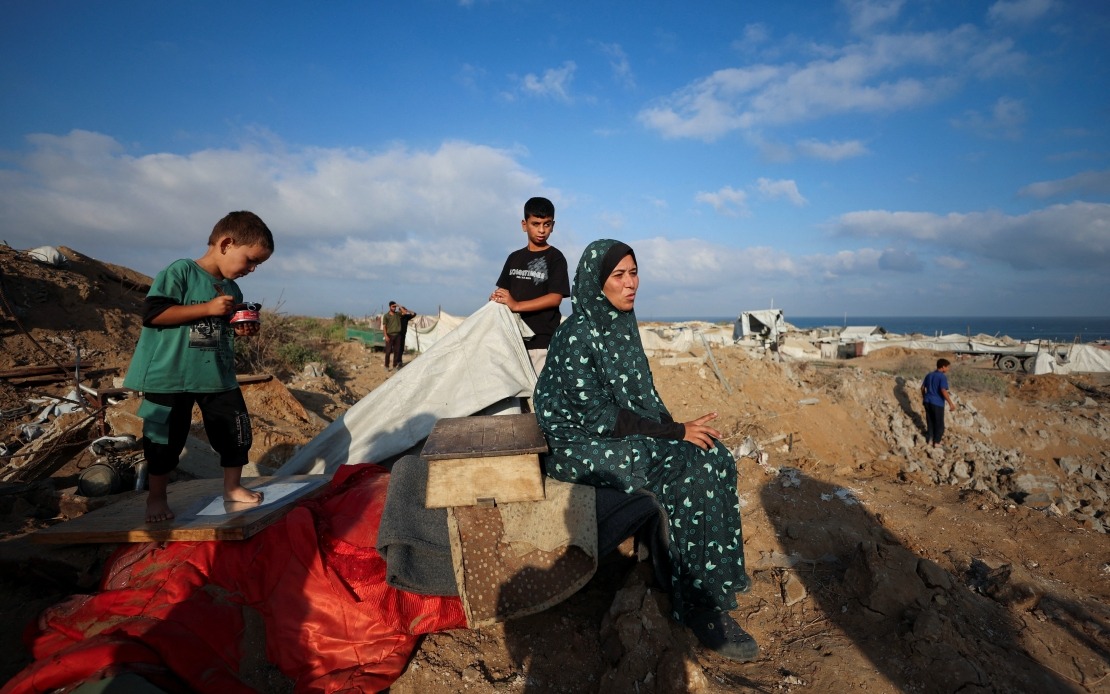
The humanitarian crisis unfolding in Gaza has reached a critical juncture as international monitoring bodies warn of a dramatic expansion in food insecurity over the coming months. According to a fresh analysis released by the Integrated Food Security Phase Classification (IPC), approximately 1.4 million residents of Gaza are expected to grapple with high levels of acute food insecurity by the end of 2026, a concerning increase from the 1.2 million documented during the April-to-June evaluation window. This upward trajectory, despite the infusion of humanitarian assistance following last October's ceasefire agreement, paints a sobering picture of a population teetering on the edge of catastrophe.
The data underscores a deepening humanitarian emergency that extends far beyond simple hunger statistics. According to the IPC's comprehensive assessment, two-thirds of Gaza's entire population—approximately 67 per cent—will find themselves in crisis conditions or worse, with 212,000 individuals relegated to emergency status representing the most acute category of food insecurity. Across all five governorates of Gaza, every administrative region has been classified as operating within crisis parameters, indicating that no area has escaped the food security collapse. This geographical totality of the crisis distinguishes the current situation from earlier emergencies where some regions maintained greater stability.
While the October 2025 ceasefire did produce tangible improvements in humanitarian access and nutritional conditions, the gains achieved were narrow and remain perilously unstable. The expanded delivery of food assistance in the immediate post-ceasefire period managed to reach approximately 1.49 million people by May, yet the IPC analysis makes clear that these rations fall substantially short of meeting basic nutritional requirements. The assistance has essentially stabilised a catastrophic situation rather than resolving it, leaving the majority of Gaza's population entirely reliant on continuing international intervention to avoid destitution.
The underlying economic collapse provides the grim foundation for this food insecurity crisis. Survey data reveals that 83 per cent of households across Gaza report having absolutely no source of income whatsoever, a figure that reflects the wholesale destruction of livelihoods across all sectors of society. Without functioning labour markets, viable commercial activity, or employment opportunities, families have no means to purchase food independently and exist in complete dependence on humanitarian assistance. This absence of economic activity means that even modest improvements in ceasefire stability do not translate into self-sufficiency or household purchasing power.
The fragility of current improvements presents perhaps the most alarming aspect of the IPC's findings. Since February, humanitarian assistance has contracted noticeably due to funding deficits and organisational uncertainties affecting international relief agencies. The precarious funding environment means that the food support currently sustaining millions of people lacks guaranteed continuity. Rather than building toward reconstruction and self-reliance, the region remains locked in a cycle where any disruption to donor commitments or operational logistics immediately threatens the survival prospects of vulnerable populations.
The counterfactual scenario presented by the IPC illuminates the absolute dependence on humanitarian systems: without ongoing food assistance, approximately 1.9 million people—representing roughly 90 per cent of Gaza's entire population—would face acute food insecurity. This figure demonstrates that humanitarian aid is not supplementing inadequate local capacity but rather substituting entirely for collapsed food systems. The withdrawal of assistance would not create hardship within an otherwise functioning society; it would trigger a cascade of suffering affecting nearly the entire population.
The nutritional consequences for Gaza's youngest and most vulnerable residents demand particular attention. The IPC projects that 74,200 children under five years of age will require medical treatment for acute malnutrition by April 2027, with 11,432 cases reaching severe status requiring intensive intervention. These figures suggest that childhood malnutrition will remain endemic and widespread, affecting child development, cognitive function, and long-term health prospects across an entire generation. Early childhood nutrition deficits create lasting consequences that extend far beyond immediate survival, impairing human capital development across decades.
Women of reproductive age represent another critical vulnerable population requiring urgent intervention. The analysis identifies 24,600 pregnant and breastfeeding women who need immediate nutritional support, a cohort whose malnutrition directly threatens both maternal survival and infant health outcomes. Pregnant women facing acute food insecurity experience elevated risks of miscarriage, stillbirth, and maternal mortality, while nutritional deficiency during breastfeeding compromises infant growth and development. This population requires specialised nutrition programming rather than general food assistance.
The IPC's conclusions emphasise three essential conditions for preventing catastrophic deterioration in coming months. Sustained and predictable humanitarian access must be guaranteed, requiring donor nations and organisations to commit long-term financing and operational support. Expanded nutrition programmes specifically targeting vulnerable groups must move beyond basic caloric provision to address micronutrient deficiencies and specialised medical nutrition needs. Perhaps most fundamentally, the fragile ceasefire must evolve toward permanent hostilities cessation, as continued military operations inevitably disrupt humanitarian logistics and destroy remaining productive capacity.
For regional observers, particularly in Southeast Asia, the Gaza situation illustrates the catastrophic humanitarian consequences when conflicts destroy civilian livelihoods and economic systems entirely. Unlike acute disasters that affect pre-existing functioning societies, the Gaza crisis involves sustained economic collapse requiring years of reconstruction. Malaysian and regional policymakers monitoring this situation should recognise that humanitarian assistance, however substantial, cannot substitute indefinitely for functioning economies and security. The crisis underscores the importance of early conflict prevention and rapid restoration of civilian economic activity as preconditions for moving beyond perpetual emergency assistance.
The coming months will test whether the international community can sustain political will and financial commitments to prevent the complete breakdown of food systems and nutritional status across Gaza. Without decisive action to expand funding, stabilise ceasefire implementation, and rebuild economic capacity, the projections of 1.4 million facing acute insecurity will likely prove conservative rather than pessimistic.

